
Before I knew much about whisky I knew I loved Ardbeg, Lagavulin and Laphroaig. My passion for this trio of peaty wonders instantly made sense the first time I sailed to Islay – they share a three-mile stretch of rugged Atlantic coastline on the southern fringes of Scotland’s whisky isle, an isle you cannot miss if you want to get under the surface of Scotland’s world-famous national drink. Pour yourself a wee dram now and I’ll introduce you to my Islay friends – there are now nine distilleries to choose from on this remarkable island in Argyll and Bute.
What is deliciously different about the Islay single malts?
Make no mistake – Islay whiskies are utterly unique and a real credit to Argyll and Bute. The simplest answer to what makes them so special is their renowned peatiness, but it’s not that straightforward. Yes, most do use peated malted barley – often from Port Ellen on Islay – but they vary the phenol levels and there are so many other factors at play in the final nose and flavour. Top notch soft water is key to start with and to finish many of the malts are matured on site, with the salty tang of the Atlantic adding maritime notes. The ocean brings the mildness of the Gulf Stream too to Islay’s shores. Together all of this is what the French call ‘terroir’ in their wine industry and it’s definitely applicable for Islay malts. Join a tour at one of Islay’s distilleries and you can learn how deliciously different all nine are.
Having just been back over recently I can report that Islay’s distilleries are once again booming. So much so there are another trio of distilleries in the pipeline, including the reborn Port Ellen Distillery.
The Distilleries
Ardbeg
The first distillery you see from the Port Ellen ferry is one of the trio of whitewashed Victorian dames on Islay’s south coast. Great café and food truck.
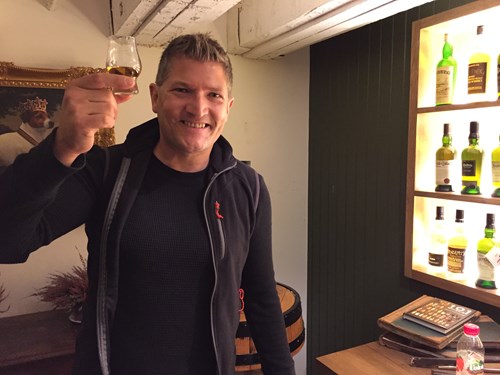 Robin McKelvie at Ardbeg Distillery enjoying a dram, Credit: Robin McKelvie
Lagavulin
Just a short stroll west of Ardbeg, this charmer has a great visitor experience and a well-stocked shop.
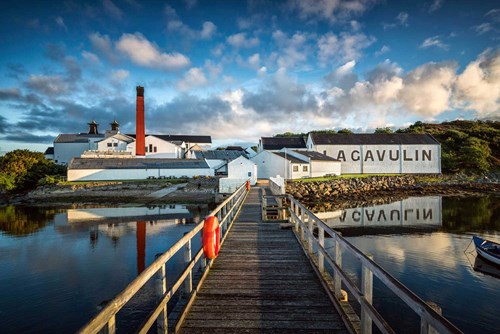 Picturesque Lagavulin, Credit: Lagavulin Distillery
Laphroaig
One of the biggest names in global whisky sneaks in just before we finally get west to Port Ellen. Interesting tastings include pairings with chocolate. You can come to ‘reclaim’ your square foot of peat by the distillery through their ‘Friends of Laphroaig’ programme.
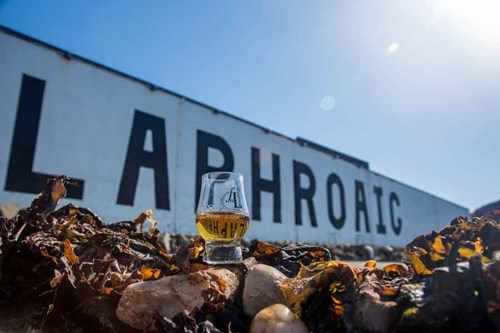 Whisky on the shore, Credit: Laphroaig Distillery
Bowmore
A distillery so entwined with the community of Bowmore, that it has used its production to heat the local swimming pool. Lovely bar peering over Loch Indaal.
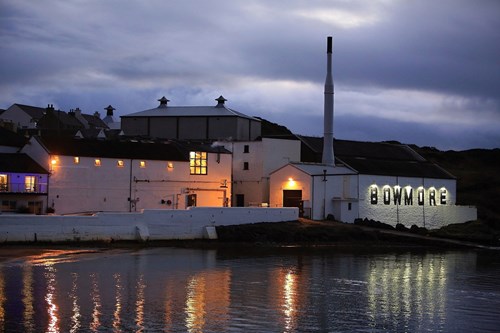 Bowmore surrounded by dark skies, Credit: Bowmore Distillery
Bruichladdich
Resurrected in 2001, this unique distillery brought back a swathe of more traditional methods to shake up the Scottish whisky industry. Still something of a pioneer.
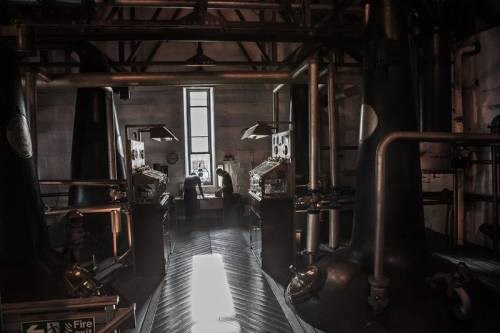 Inside Bruichladdich Distillery, Credit: Bruichladdich Distillery
Kilchoman
I was worried this wee farm distillery would not make it after opening in 2005. But they’ve gone from strength to glorious strength. Excellent café weaving in local produce.
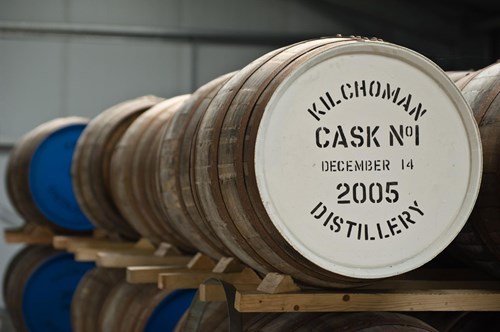 Casks, Credit: Kilchoman Distillery
Caol Ila
The biggest Islay distillery has just totally revamped its visitor experience; it’s now a must-visit. Great views across to Jura too.
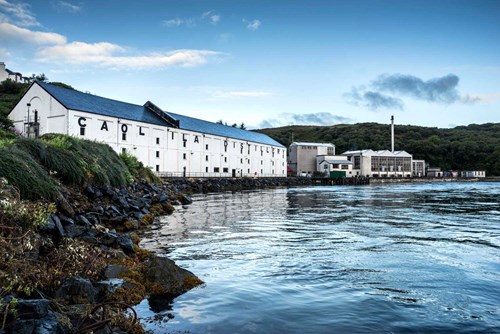 Caol Ila on the shore banks, Credit: Caol Ila
Ardnahoe
Islay’s newest distillery opened in 2019. It’s got great views of Jura and the top-notch Illicit Still Café.
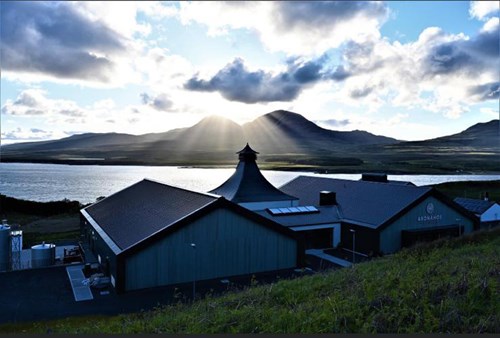 Ardnahoe and the views of Jura, Credit: Ardnahoe Distillery
Bunnahabhain
Sherry-tinged malts on the Sound of Islay rule here in this spectacular spot. They’ve upped their visitor experience of late.
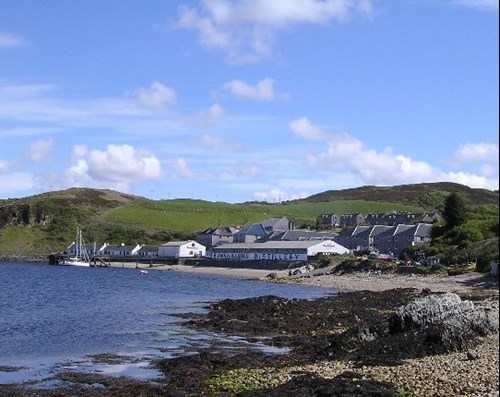 Sunny Islay and Bunnahabhain Distillery, Credit: Bunnahabhain Distillery
How do you create an Islay single malt whisky?
The Stages of Production
I’ve just been back to Ardbeg and had the privilege of a personal tour with distillery manager Colin Gordon, a man seriously passionate about whisky. He talked me through the stages of production showing me the tweaks that Ardbeg make to the process to make their malt distinctive. It’s a window into how the distilleries are so different to each other on Islay. Every single one uses different touches to produce flavours and expressions that are instantly recognisable to their devoted legions of fans.
Malting
Ardbeg source much of their malted barley from just along the road at the Port Ellen Maltings. Ardbeg’s malt has a relatively high peat content even for Islay. But here starts the magic for me as their drams taste more balanced than fire for fire’s sake. In the malting, barley is steeped and encouraged to start germinating, before it is dried to stop the process as sugars are released. Here burning peat is used to dry it, as with most of the Islay malts.
Mashing
I think of this is as when they make ‘porridge’. Ardbeg introduce hot water to the milled barley in the mash tun. This vessel ensures a stable temperature as the wort is created; a baseline needed for any malt whisky.
Fermentation
Here we really get going as yeast is introduced. It works its live-culture magic by converting the sugars to alcohol. Gordon explained how what they do here affects the final whisky – “We use top quality Oregon Pine washbacks. And unusually they are not fitted with switchers, which helps give Ardbeg the waxy mouth feel that people associate with our malts.” There are differences with fermentation time too – “We ferment longer than many Scottish distilleries at around 67 hours, which brings more sweet and complex flavours out.”
Distillation
Here the liquid is distilled twice – once in a wash still and then again in a sprit still. Ardbeg has just crafted four new stills, two of each. It’s doubled their production, but has been done very carefully so the new stills are an exact match for the old ones. The Islay whisky industry doesn’t take chances on affecting flavour with radically different new stills. “The big thing for us here is our purifier. It helps bring in those big fruity notes that people expect from Ardbeg”, explains Gordon. I get smoky bananas, in a very good way. “We also cut late to the feints, which picks up the bigger, bolder flavours,” adds Gordon, which he says brings out spicy, nutty notes too. I also meet Alastair Blair. This stillman stresses to me he sees Ardbeg as being all about that “balance”, weaving spice, sweetness, and nuttiness into a backbone of flavoursome peat. How the Islay distilleries balance their peat tends to be key to the final expressions.
Maturation
In one of Ardbeg’s on-site warehouses, I met ‘Dugga’ who I first met in 2005. He had just celebrated working here for 25 years. “Being able to mature a lot of our whisky on site is important for us and much Islay whisky. You can see the open windows straight out to the Atlantic, which is ideal for maturing whisky and keeping it at the right temperature. We generally go for ex-Bourbon casks, but are open to sherry too and occasionally other finishes. The cask has a massive effect on both the colour and the flavour.”
I’ve delved into one distillery for you here, but remember that each of the Islay malts has its own rich heritage, its own story and characters. And, of course, its distinct flavour, aroma and mouth feel. Whether you just want to pop into one or two distilleries, come here for the legendary Feis Ile whisky festival in May, or tour them all is up to you. What is guaranteed is that you’ll have endless fun delving into the unique world of Islay whisky. And every single sip of Islay malt you savour from now on will be alive with the flavours and hues of this glorious island and its distilleries. Slainte!